
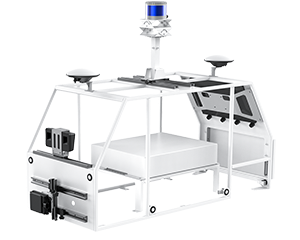

The Past and Present of Ackermann Mobile Robots
1. 阿克曼转向的过去与现在
阿克曼动力学
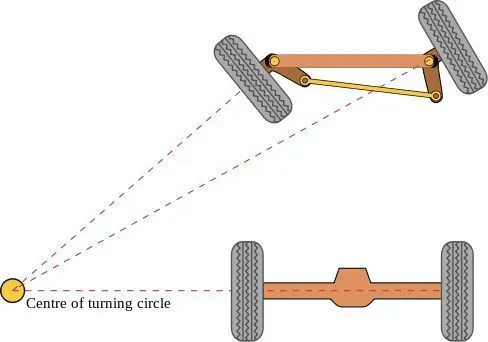
阿克曼几何起源于汽车应用,是一种旨在实现车辆平稳转弯的基本机制。车辆过弯时,内侧车轮和外侧车轮以不同的角度转向,使得内侧车轮的转弯半径小于外侧车轮。
这种几何形状最初是由德国马车制造商格奥尔格·兰肯斯佩格于 1817 年设计的。他的代理人鲁道夫·阿克曼于 1818 年在英国为这项发明申请了专利,之后这种转向几何形状就被广泛称为阿克曼转向。
然而,早在几十年前,伊拉斯谟·达尔文就已经构思出了这个概念。作为进化论先驱查尔斯·达尔文的祖父,伊拉斯谟·达尔文是英国历史上的一位传奇博学家——科学家、诗人、发明家、植物学家和医生。
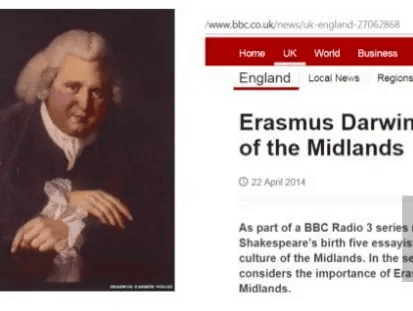
在剑桥和爱丁堡求学之后,达尔文25岁时在利奇菲尔德开始行医。他精湛的医术为他赢得了广泛的声誉——甚至促使乔治三世国王邀请他担任宫廷御医,但达尔文婉拒了这一邀请。他多才多艺,在伯明翰月光社中也扮演了重要角色,并与因改进蒸汽机而闻名的詹姆斯·瓦特结下了深厚的友谊。
在他乘坐马车四处奔波为病人看病期间——类似于下图所示:
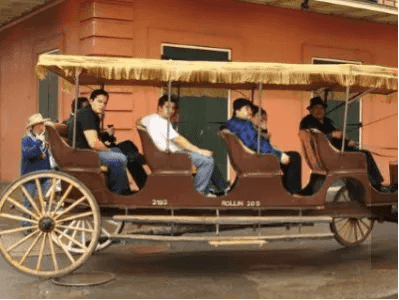
历史马车转向装置示意图
达尔文每年行驶超过 10,000 公里,很快便发现了传统马车转向系统的两个主要缺陷:
(1)障碍物通过限制:由于前轮绕中央枢轴转动,车轮直径受到限制,容易被岩石和障碍物抬起。
(2)几何车轮干涉:平行的前轮迫使四个车轮走上相互冲突的转弯弧线,导致马车在转弯时容易卡住和打滑。
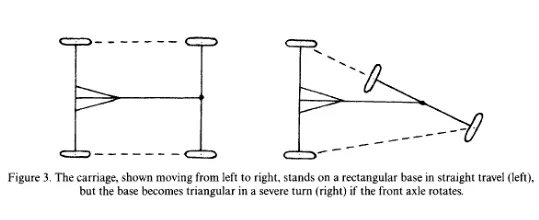
在这些挑战的驱使下,达尔文开始改造他的马车。到1766年,他与朋友的通信显示,他已经改装了两辆马车,并进行了超过1万公里的道路试验。
In 1767, Darwin and James Watt exchanged insights regarding steam power applications. While Watt focused on stationary industrial machinery, Darwin envisioned steam power replacing horses in road locomotion. Darwin shared chassis design sketches featuring an early linkage steering mechanism, which Watt recognized on the envelope as a rectangular linkage structure.
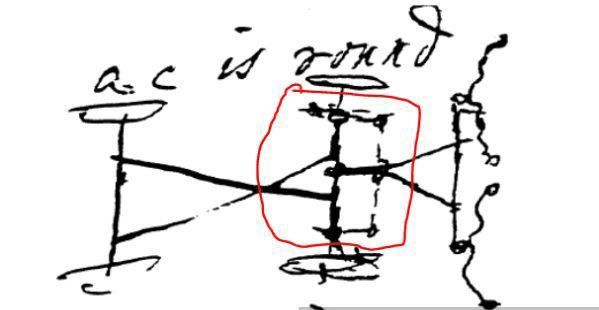
Original Linkage Steering Manuscript
By 1768, Darwin documented the complete trapezoidal four-bar linkage steering mechanism in his letters:
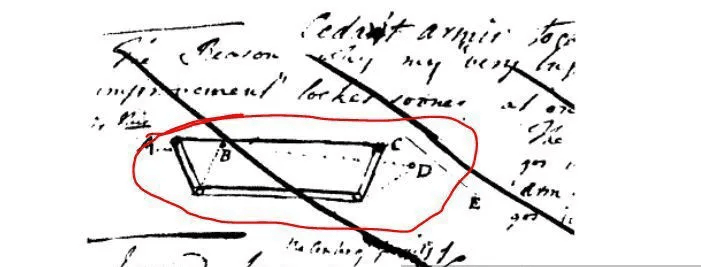
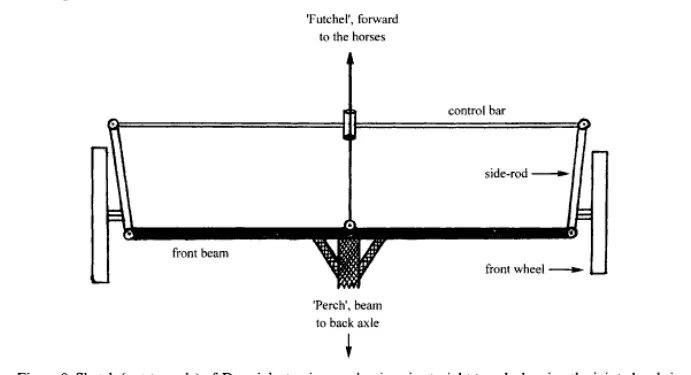
Trapezoidal Four-Bar Linkage Manuscript
This linkage mechanism was fundamentally identical to modern automotive steering geometry. However, manufacturing constraints of that era prevented widespread adoption, and four-wheeled carriages continued using center-pivot axles for another century. It was not until the emergence of the modern automobile that Ackermann steering realized its full potential.
Early Benz prototype vehicles started as simple three-wheelers, largely due to the complexity of front-wheel four-bar steering mechanisms:
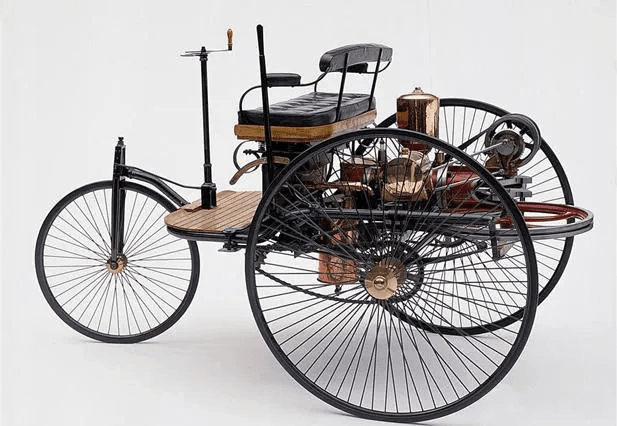
Early Benz Three-Wheeled Prototype
From its second model onward, Benz permanently transitioned to four-wheeled configurations utilizing Ackermann steering, ushering in the rapid expansion of the automotive industry.
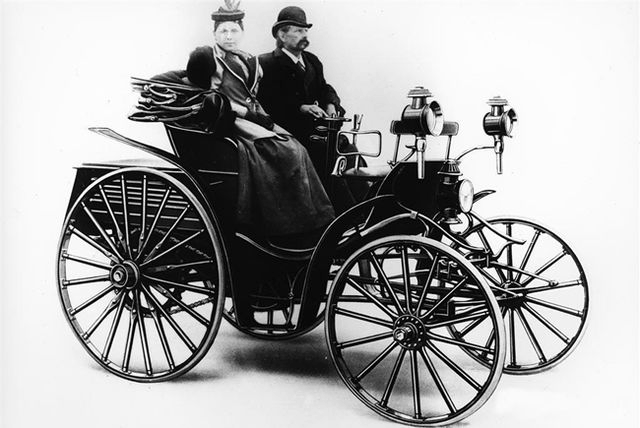
Early Benz Four-Wheeled Prototype
2. Ackermann Steering in Mobile Robotics
During the early stages of mobile robotics, two-wheel differential drive configurations were the dominant approach. Between 1956 and 2013, most mobile robotics research relied on differential steering architectures. However, these systems faced identical constraints to those encountered 250 years earlier: poor terrain passability, inability to handle heavy payloads in outdoor environments, high maintenance frequency, and limited suitability for non-structured outdoor domains.
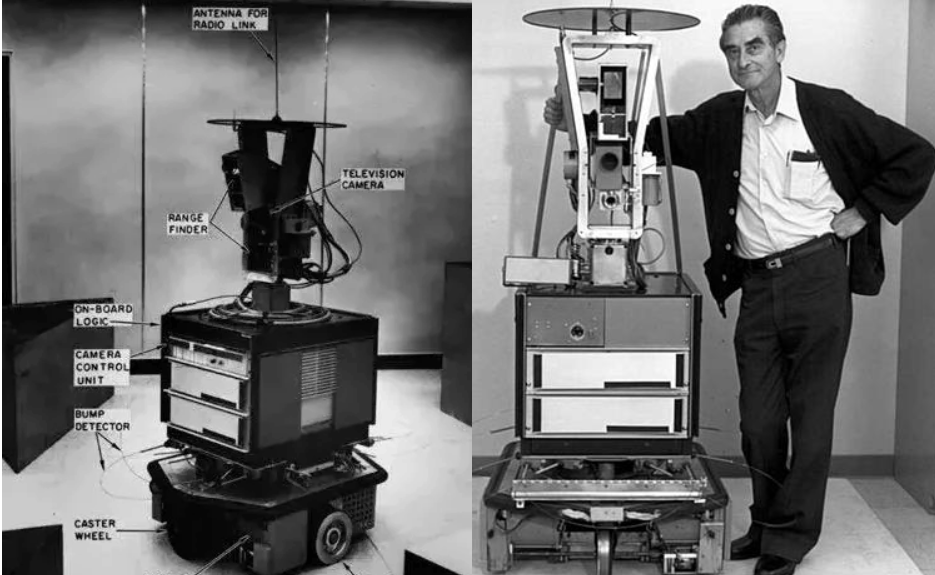
Early Two-Wheel Differential-Drive Prototype (Stanford Research Institute, 1966–1972)
In 2013, four mobile robotics pioneers founded YUHESEN to enable intelligent mobile robots across diverse industrial environments. Lead engineer Li Leida proposed implementing the Ackermann steering mechanism to achieve scalable, all-scenario deployment. The engineering team redesigned traditional differential platforms and conducted a 3-year, 10,000-kilometer field validation program through 2016.
This breakthrough opened the door to widespread adoption, followed by large-scale commercial deployments across logistics and e-commerce leaders. Industry data indicates that as a leading mobile robot chassis provider, YUHESEN maintains an annual application growth rate of 350%–400%, driving overall industry growth beyond 100%.
3. Core Advantages of Ackermann Mobile Robots
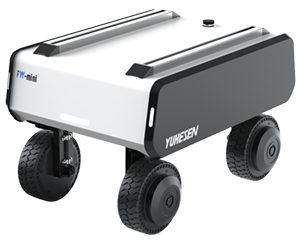
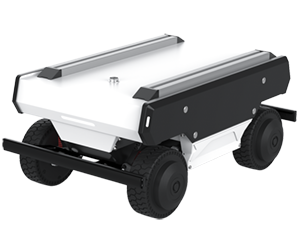
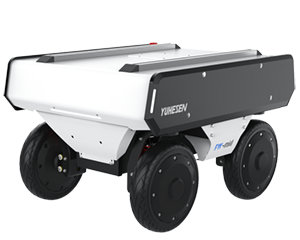
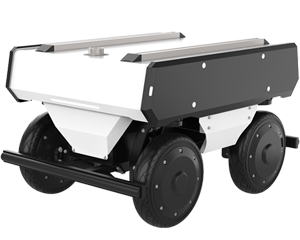
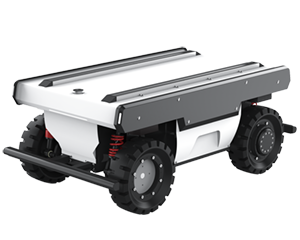
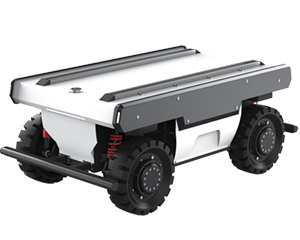
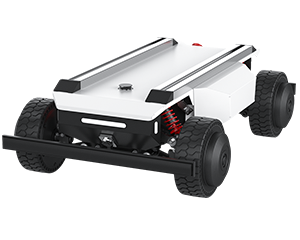
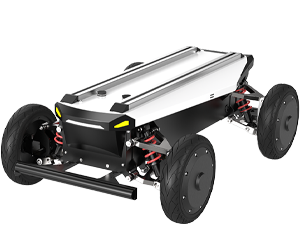
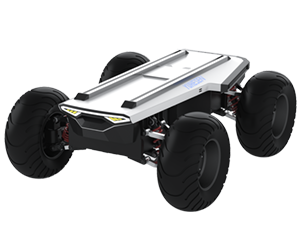
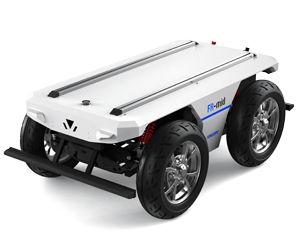
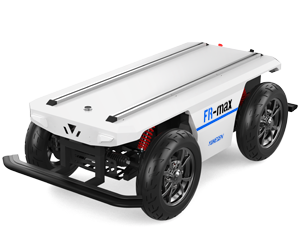
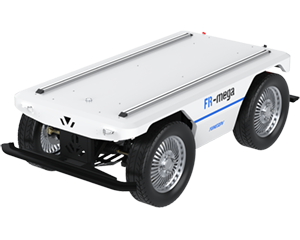
轮式阿克曼移动机器人底盘平台专为铺装道路环境而设计,可实现高达 600 公斤的重型有效载荷运输、周界安全巡逻、自主清洁和智能移动辅助。
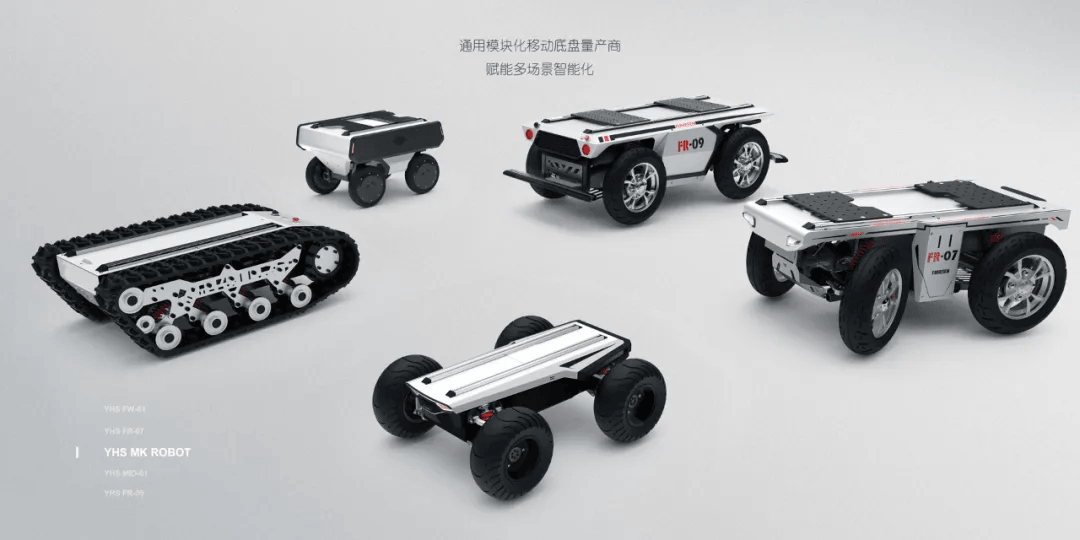
该平台结合了后轮差速驱动桥和精确的前轮转向角,可实现稳定的前进、后退和转弯运动。凭借高承载能力和精确的运动控制,阿克曼底盘架构已成为现代户外作业机器人的标准硬件配置。


