
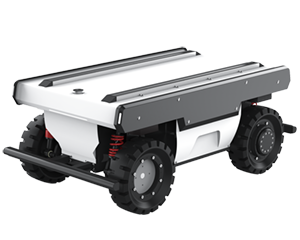
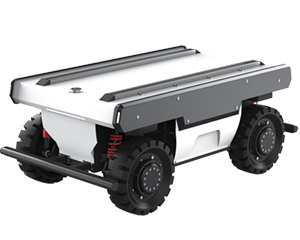
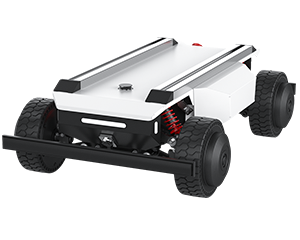
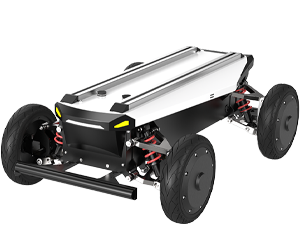
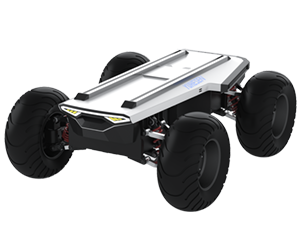
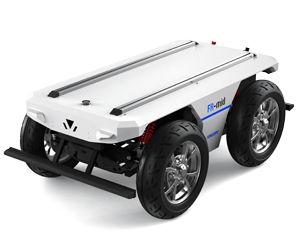
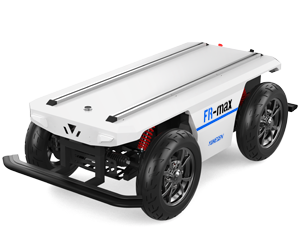
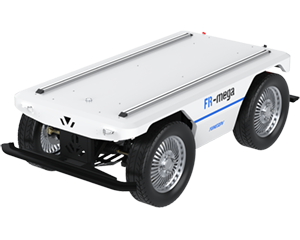
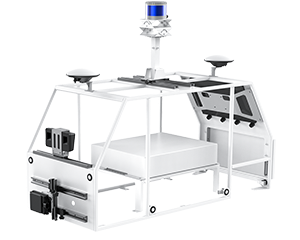

Omnidirectional 4WD-4WS vs 4WD Skid-Steer Chassis: An In-Depth Technical Comparison and Selection Guide for Mobile Robot Chassis
Omnidirectional 4WD-4WS vs. 4WD Skid-Steer Chassis: An In-Depth Technical Comparison and Selection Guide for Mobile Robot Chassis
In the development of Autonomous Mobile Robots (AMRs), industrial inspection vehicles, and special-purpose operation vehicles, the mobile robot chassis serves as the core hardware platform carrying the powertrain, navigation system, and upper payloads. The choice of technical architecture directly determines the upper limit of the vehicle's motion performance, positioning accuracy, and long-term maintenance costs.
From a technical standpoint, today's mainstream four-wheel-drive mobile chassis fall into two major categories:
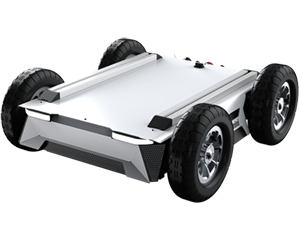
1)Omnidirectional Four-Wheel Drive & Four-Wheel Steering (4WD-4WS): employs distributed in-wheel motors with independent, modular steer-by-wire units;
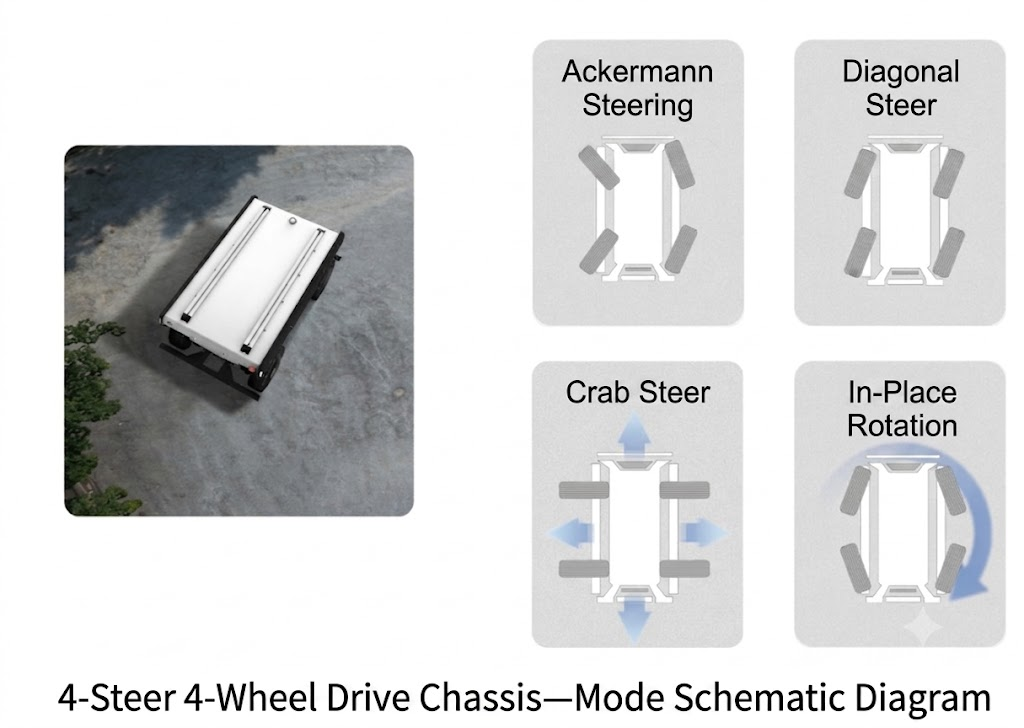
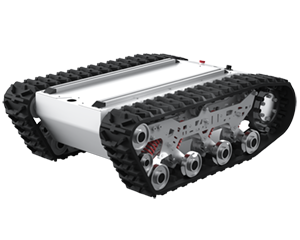
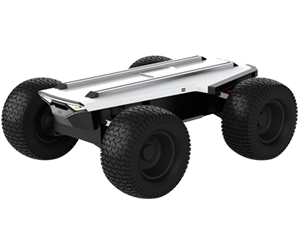
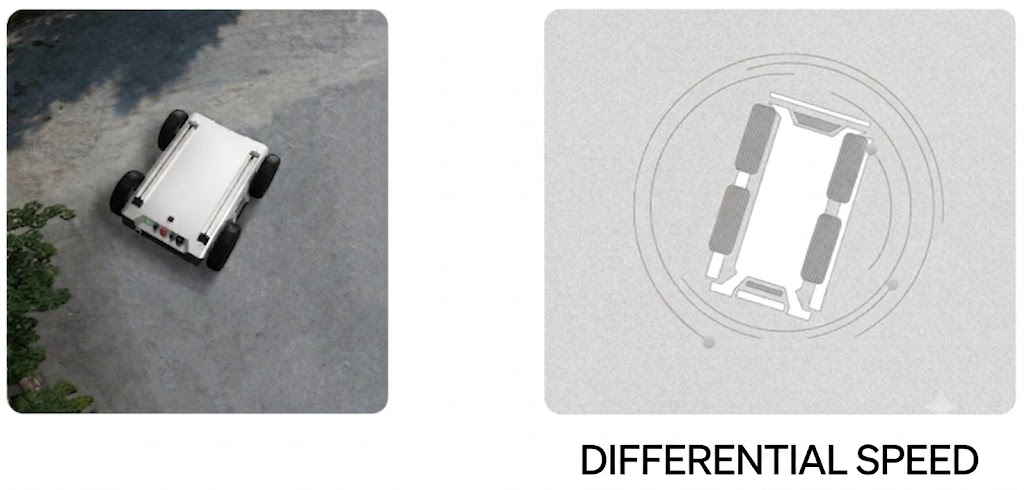
2)Conventional Four-Wheel Skid-Steer (4WD Skid-Steer / Differential Drive): achieves steering through lateral slippage generated by the speed difference between the left and right wheels.
In the sections that follow, we provide an in-depth analysis of the technical differences between the two solutions — along with selection recommendations — across six dimensions: technical principles, motion performance, motion modes, mechanical structure, maintenance cost, and industrial adaptability.
| Comparison Dimension | Omnidirectional 4WD-4WS Chassis | 4WD Skid-Steer Chassis |
|---|---|---|
| Steering & Drive Principle | Four independent in-wheel drives + four independent steer-by-wire units | Differential drive via left/right motors (skid steering) |
| Ground Friction & Wear | Pure rolling friction; no additional lateral shear wear on tires | Skid steering causes severe lateral scrubbing and heavy tire wear |
| Positioning & Control Accuracy | High (smooth trajectories, minimal slip; compatible with LiDAR/visual SLAM) | Susceptible to abrupt changes in ground friction; prone to position drift |
| Maneuverability | Supports conventional Ackermann steering, diagonal driving, lateral (crab) translation, in-place rotation, etc. | Only supports straight-line driving, large-radius turns, and differential in-place turning |
| Mechanical Drivetrain | Direct in-wheel drive; no gearboxes or complex transmission chains; high space utilization | Relies on gear reducers and chains/gearboxes; bulky structure with many maintenance points |
| Parking Safety | Supports "X"-shaped diagonal active self-locking parking; prevents rolling on slopes | Relies on mechanical brakes or static motor holding torque |
| Best-Fit Scenarios | High-precision indoor/outdoor inspection, loading/unloading in narrow aisles, R&D | Low-cost open outdoor sites, light-load transport, entry-level applications |
1. Technical Principles
1.1 Omnidirectional 4WD-4WS: Modular Steer-by-Wire Corner Modules
The omnidirectional 4WD-4WS chassis adopts an integrated architecture combining distributed in-wheel motors with steer-by-wire mechanisms. Each wheel is equipped with its own independent drive motor and steering actuator, completely eliminating the conventional mechanical steering column and linkage. Its core advantages are twofold:
1) Software-defined powertrain: the chassis control algorithm performs precise torque vectoring and coordinated steering-angle control across all four wheels.
2) High robustness: on bumpy surfaces or when a single wheel slips, the system can dynamically redistribute power to the remaining three wheels via the control algorithm, keeping the heading angle stable.
1.2 4WD Skid-Steer: Slip-Based Steering via Wheel-Speed Differential
A 4WD skid-steer chassis steers by controlling the speed difference between the left and right wheel sets (or even reversing one side). This approach has two inherent limitations:
1) Slip dependency: differential steering is essentially skid steering — during a turn, the tires are inevitably forced to slip against the ground in a non-circular direction.
2) Control uncertainty: steering resistance torque is highly dependent on the ground material (concrete, asphalt, epoxy flooring, wet tile, etc.). Encoder slip causes odometry errors to accumulate, increasing the fusion and matching difficulty for higher-level navigation algorithms such as LiDAR SLAM.
2. Motion Performance Comparison: Agility, Positioning Accuracy, and Traversability
2.1 Positioning Accuracy and Odometry Stability
When a 4WD-4WS chassis turns, its wheels remain predominantly in rolling contact, so wheel-speed sensor and encoder data more faithfully reflect changes in the vehicle's pose. Dead-reckoning errors accumulate slowly, making sensor fusion with high-precision navigation algorithms — such as LiDAR and visual SLAM — straightforward. By contrast, skid-steer turning depends on tire-to-ground slippage, and the actual slip ratio is strongly affected by the ground material (e.g., epoxy flooring, concrete, wet surfaces) and load distribution. This physical slip easily causes odometry drift, requiring more complex algorithmic compensation in applications that demand high repeat-positioning accuracy.
2.2 Terrain Adaptability and Tire Wear
Because lateral scrubbing during steering is minimized, a 4WD-4WS chassis experiences less tire wear when turning frequently on hard surfaces. Combined with a modular, low-mounted battery layout that lowers the vehicle's center of gravity, it delivers good driving stability on grass, gravel, and indoor-outdoor transition surfaces. A skid-steer chassis faces low steering resistance and performs well on soft terrain such as dirt and gravel; however, frequent turning on high-friction hard surfaces (such as epoxy floors in industrial workshops) accelerates tire wear and may leave scuff marks on the ground.
3. Motion Mode Analysis: Single Steering Mode vs. All-Scenario Multi-Mode Coverage
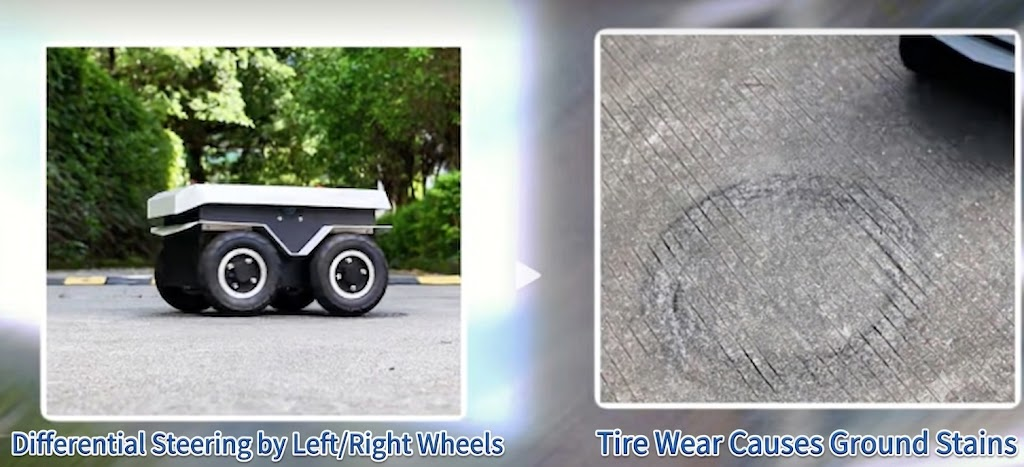
Reference example: floor wear caused by skid steering
When operating in confined spaces (such as equipment-dense server rooms or narrow warehouse aisles), a conventional skid-steer chassis often has to repeatedly perform large-angle "back-and-forth reversing + in-place skid rotation" maneuvers. This is not only inefficient but also easily scratches and wears epoxy flooring.
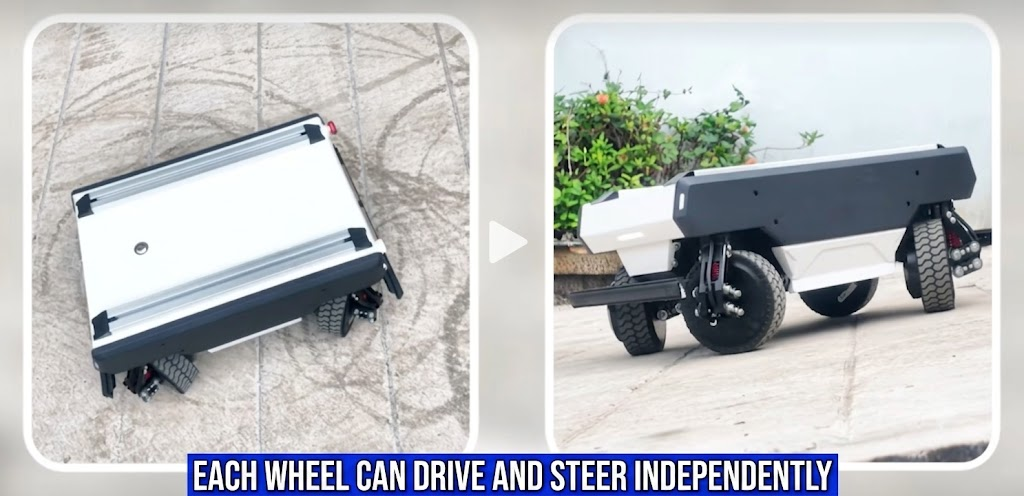
Reference example: independent four-wheel steering of a 4WD-4WS chassis
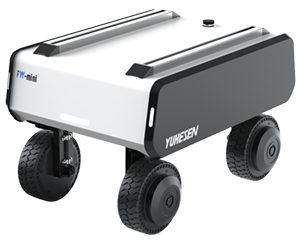
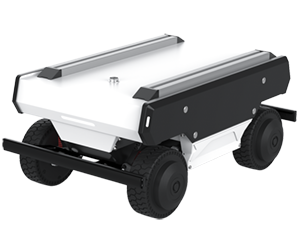
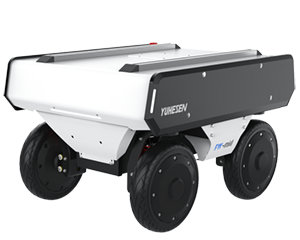
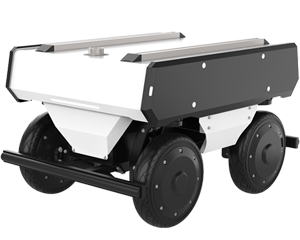
The YUHESEN omnidirectional 4WD-4WS chassis supports seamless switching between multiple motion modes, greatly expanding the operating envelope of special-purpose robots. These modes give the robot exceptional agility:
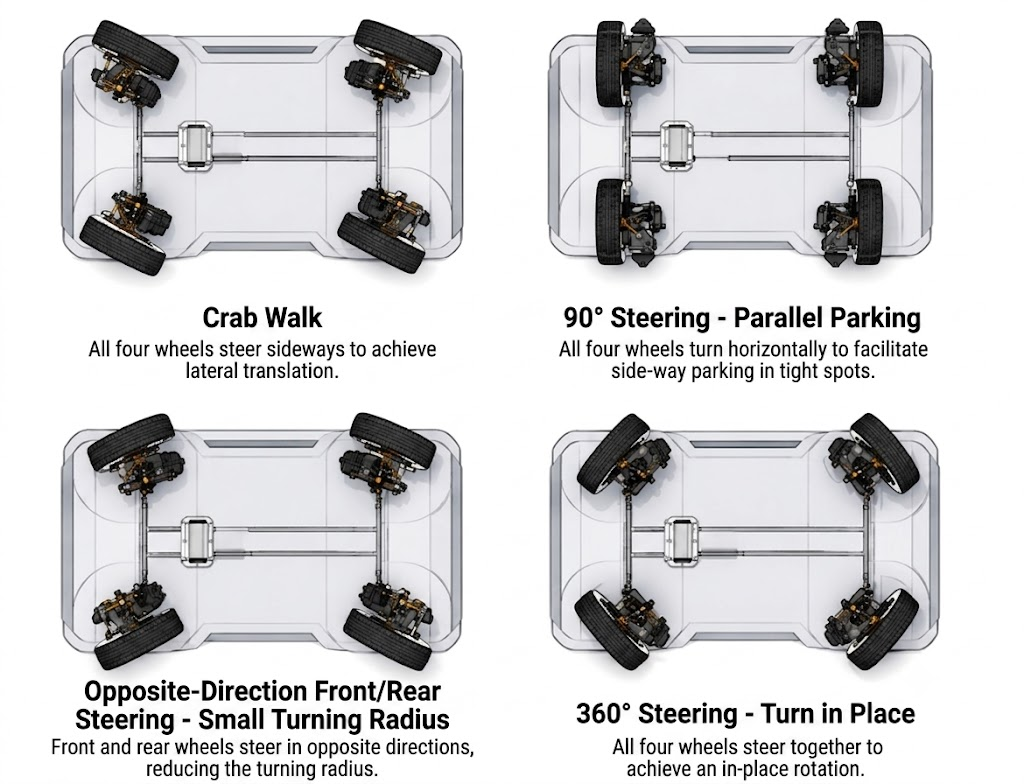
1) Dual-Ackermann Mode: the front and rear wheels steer in opposite directions, enabling a dynamically variable turning radius. During cornering, all wheels fully conform to the pure-rolling kinematic model, producing smooth trajectories while effectively reducing steering resistance and energy consumption.
2) Crab / Lateral Mode: all four wheels steer in the same direction, allowing the vehicle to translate purely sideways without changing its heading. Ideal for lateral docking in narrow aisles, charging alignment, and container side-loading operations.
3) Diagonal Mode: all four wheels steer in the same direction within a specific angular range, enabling fast diagonal lane changes while the body maintains its orientation. During high-speed lane changes, this effectively suppresses the yaw rate and eliminates lateral instability.
4) X-Parking Safety Design: all four wheels steer inward into an "X" configuration, mechanically interlocking with one another. Even in the event of power loss, shutdown, or operation on a slope, this creates a natural geometric self-locking resistance — delivering intrinsic safety with zero power consumption, no need for continuous motor energization, and absolutely no rolling on grades.
4. Mechanical Structure and Maintenance Cost Comparison
4.1 Component Count and Space Utilization
A 4WD skid-steer chassis typically requires gear reducers, chains, or gear transmission sets — a mature mechanical architecture. However, in compact robot designs, these transmission components occupy considerable assembly volume in the middle of the chassis.
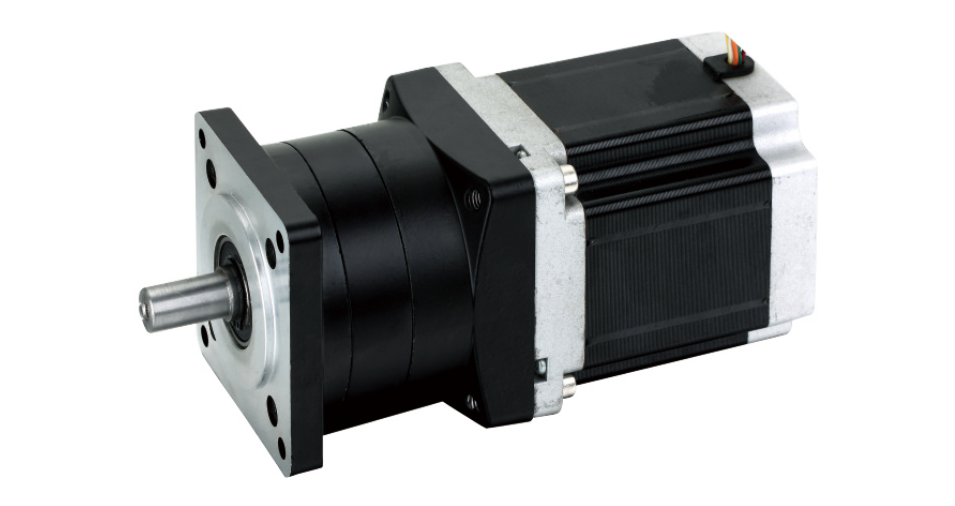
Example: motor configuration of a skid-steer chassis
The 4WD-4WS chassis uses direct in-wheel motor drive and integrated wheel-corner steering units, eliminating certain conventional intermediate transmission elements such as mechanical gearboxes, drive shafts, and differential linkages. This distributed structure significantly reduces internal mechanical occupancy, freeing up ample layout space for the power battery, industrial PC, lifting mechanisms, and various top-mounted sensors.
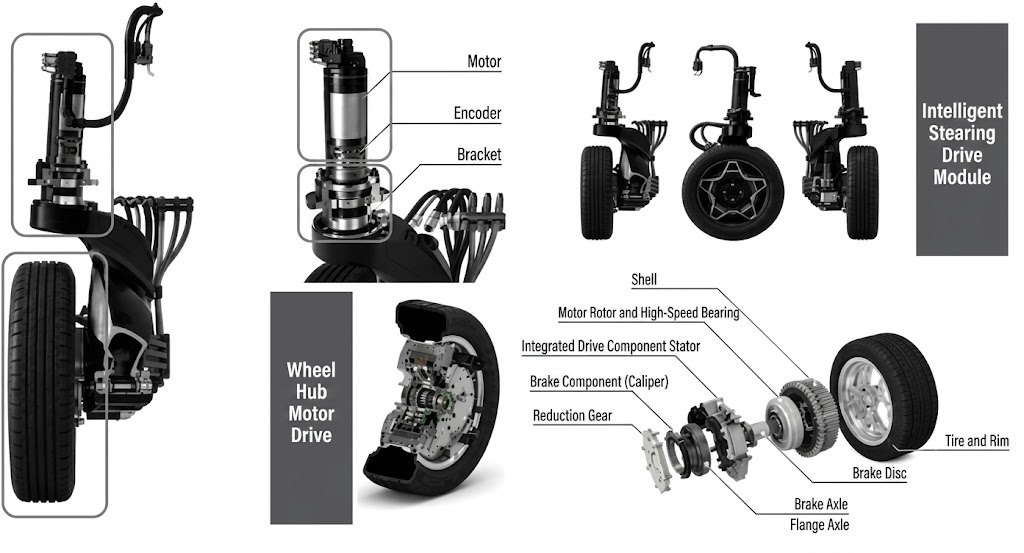
Example: motor configuration of a 4WD-4WS chassis
4.2 Mechanical Wear and Maintenance Intervals
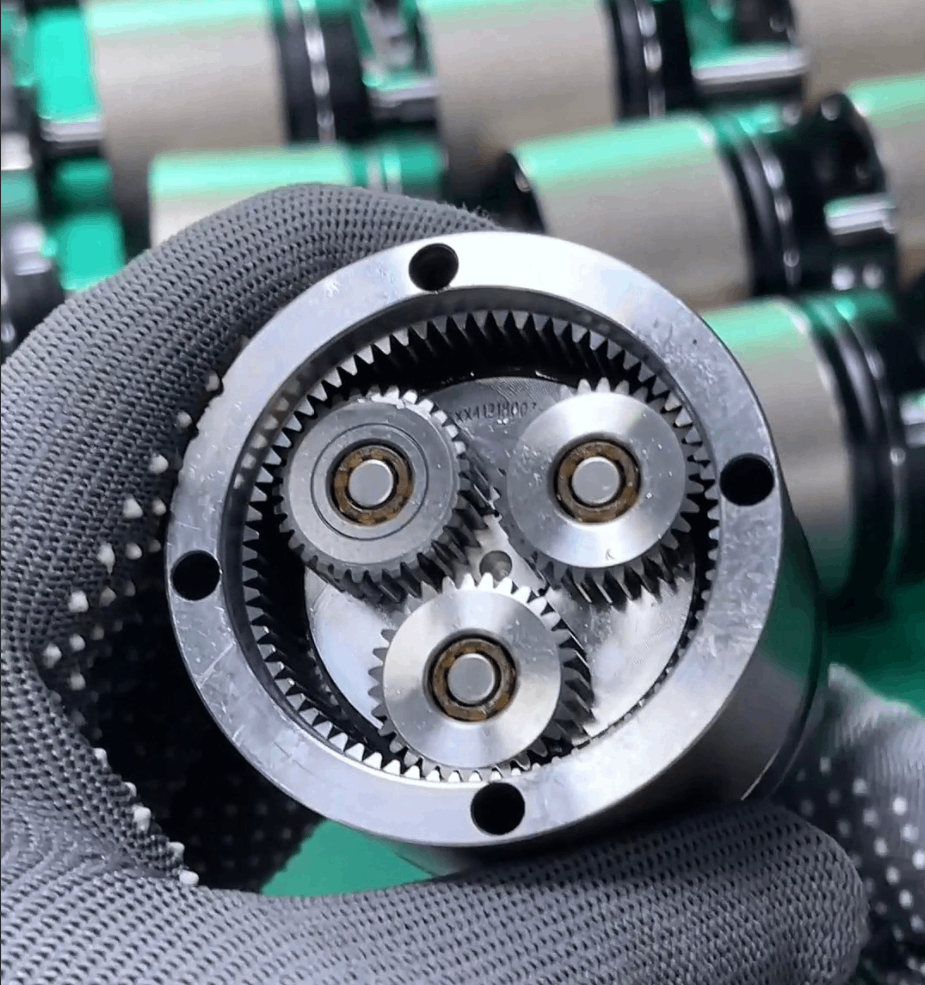
Example: reducer wear and maintenance case
When the mechanical transmission components of a skid-steer chassis endure steering shock loads and alternating stresses over extended periods, the gear backlash of the reducers, chain tension, and sealing condition all require regular inspection and maintenance. The 4WD-4WS chassis has relatively few intermediate transmission wear points; routine maintenance mainly involves standard checks of the electrical system and wheel-corner modules, with low maintenance demand related to mechanical clearances and transmission wear.
5. Scalability Comparison: Modular Design and Application Adaptability
In mobile robot R&D and feature expansion, the chassis's adaptability to different size specifications and payload requirements is likewise an important evaluation criterion:
The 4WD skid-steer chassis is a mature mechanical solution with high structural integration, making it well suited to mass-produced, standardized general-purpose mobility applications. However, because its powertrain and steering are tightly coupled, when the vehicle requires substantial track-width or wheelbase changes, or must carry complex superstructure functions, secondary expansion and structural flexibility are relatively limited.
In the omnidirectional 4WD-4WS chassis, every wheel is an independent drive-and-steering actuator unit. The chassis architecture offers greater decoupling and flexibility, allowing structural adjustments and functional derivatives to be implemented more readily according to different operating conditions, load ratings, and body-space requirements.
The YUHESEN omnidirectional 4WD-4WS mobile chassis adopts a modular wheel-corner system design, with drive and steering modules laid out independently. It supports flexible adjustment of chassis dimensions and payload configurations based on actual application needs, providing a more adaptable foundation for mobile robot development and solution integration.
6. Selection Conclusions and Recommendations
When to choose a 4WD skid-steer chassis: extremely budget-sensitive projects; operation on flat, soft surfaces (e.g., loose soil, grass); entry-level basic mobile platforms with modest stopping-positioning accuracy requirements.
When to choose an omnidirectional 4WD-4WS chassis: applications demanding high motion accuracy; confined workspaces; hard flooring surfaces where tire slip and wear must be eliminated; and mid-to-high-end use cases requiring long endurance and maintenance-free operation — such as industrial inspection, power substation monitoring, explosion-proof special operations, and university/research secondary-development platforms.


